Part 2 - From Everest Rhetoric to Design Authority: How India Uses Aerospace JVs
Part 2 of 2 – From Kamov Lessons to Design Authority

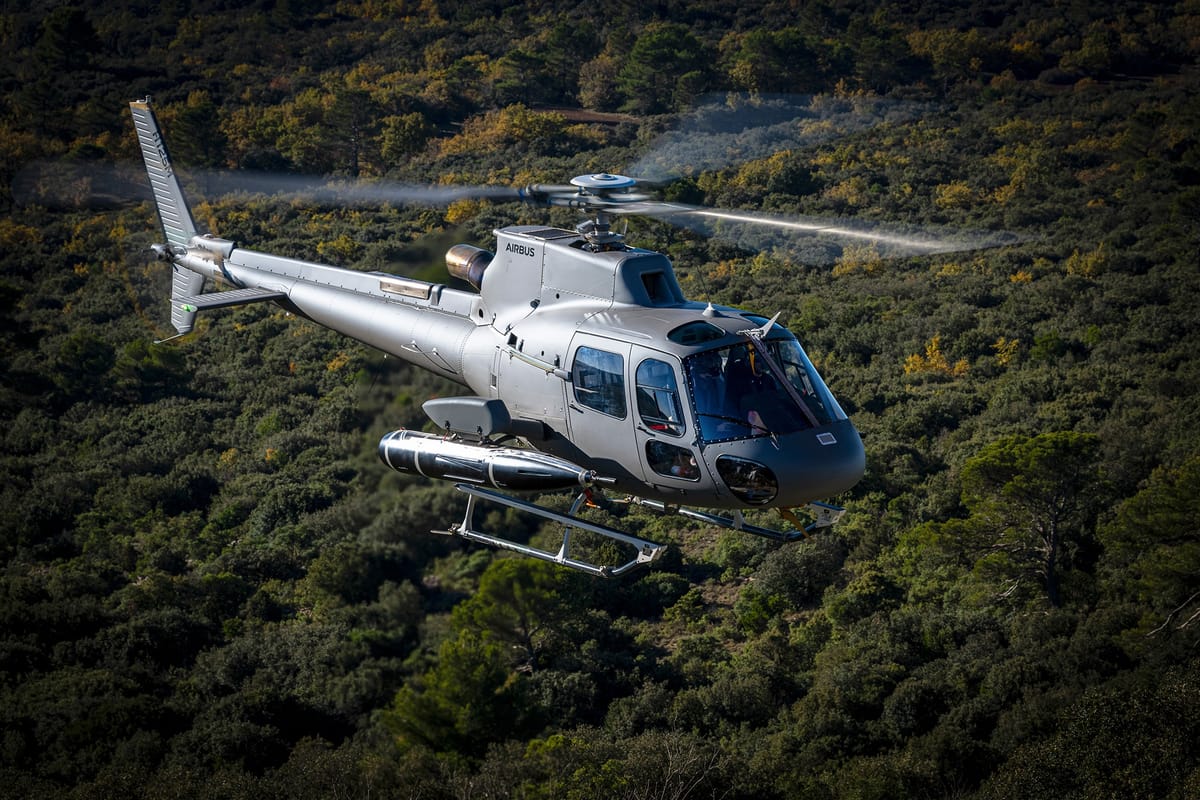
Part 2 turns to the “middle” of India’s helicopter plans, and then back again to AMCA, to ask whether we are finally baking learning and design authority into the contracts from day one.
Why Shakti matters in strategic terms
Shakti does not mark India’s first encounter with aero‑engines—that began decades ago with licensed production of Artouste, Adour, TM333 and a range of Russian turbofans—but it is India’s first genuinely structured co‑development and deep‑localisation effort on a modern turboshaft, rather than a pure screwdriver‑giri licence build. The Navy’s experience in setting up a Pegasus engine overhaul line for Sea Harriers at Kochi under a Rolls‑Royce‑supported project is an earlier, limited precedent for such in‑country sustainment.
Shakti demonstrates that, given sufficient production volume, political leverage and an indigenous programme to anchor demand, a JV can evolve from “assembled in India” to “substantially built, supported and industrialised in India.” But it also reveals the ceiling: design authority and core architecture still rest outside India.
The proposed Aravalli engine for IMRH/DBMRH—and the far more ambitious AMCA powerplant—are explicitly framed as the next rungs on that ladder. The question is whether they remain scaled‑up Shakti models or cross the threshold into genuine co‑ownership of design and technology. That distinction will define whether India is climbing the ladder—or merely standing a few steps higher on the same one.
Owning the middle: IMRH and DBMRH
IMRH is where India first tries to operationalise the Shakti lesson at a higher weight class.
If the Ka‑226T was a lesson in how a three‑flag JV can collapse when engines and IP are an afterthought, and Shakti is proof that a Safran engine JV can inch its way towards deeper localisation over two decades, HAL’s Indian Multi‑Role Helicopter (IMRH) and its deck‑based naval sibling, the Deck‑Based Multi‑Role Helicopter (DBMRH), are India’s attempt to compress that learning into a single, deliberately structured programme. NMRH in Indian usage refers to the separate Naval Multi‑Role Helicopter acquisition—some 120-plus imported 9–12.5-tonne-class helicopters—not the indigenous IMRH/DBMRH line.
For readers who want a broader primer on specialist naval‑aviation helicopter requirements and an early exploration of some of the themes developed here, I would point them to a 2017 guest column I wrote for Force magazine on Indian naval aviation. For those interested in an unedited version of that framing, I have archived the piece here.
IMRH, a roughly 13‑tonne class helicopter, and the slightly lighter deck‑based naval variant are meant to take over roles now performed by Mi‑17s ashore and imported MRH (notably the Seakings and the later Lockheed Martin MH‑60R) at sea, sitting above the Dhruv/LUH/H125 class and below the heavy‑lift tier. For the first time, New Delhi is treating this “middle” of the rotorcraft spectrum as a space it must own, rather than merely fill with imports or licence‑built designs.
The key to that ownership is the engine. In 2022–24, HAL and Safran Helicopter Engines agreed to establish a joint venture, SAFHAL, to design, develop, produce and support a new turboshaft family—subsequently christened Aravalli—for IMRH and DBMRH. Unlike the Ka‑226T’s Arrius 2G1, which sat outside India’s ToT envelope and helped kill the programme, Aravalli is structured from the outset as a co‑developed engine with design centres, test infrastructure and production in India baked into the business plan. Safran brings core technology and certification experience; HAL brings integration with Indian platforms and the scale of tri‑service demand.
IMRH/DBMRH and Aravalli are also being pitched as dual‑use assets from day one: not only for troop lift, ASW and special operations, but also for offshore energy, SAR, VVIP and utility roles, with civil certification and MRO networks part of the roadmap rather than an afterthought. In other words, this is India trying to build the same kind of military‑civil rotorcraft ecosystem that Airbus has long cultivated in Europe and is now exporting to India through H125 and H135.
Seen alongside H125, C295 and the failed Kamov deal, IMRH/DBMRH marks an emerging third pillar in India’s aerospace strategy. H125 and C295 embed Indian firms in Airbus’ global value chains; the Kamov saga shows the cost of ignoring engine IP and sanctions‑proofing; IMRH/DBMRH, with a co‑developed Aravalli engine represent India’s bid to create a medium‑lift helicopter family where foreign partners are scaffolding for an Indian‑branded product, not permanent owners of its most critical subsystems.
The same questions become even sharper when we move from helicopter engines to the AMCA powerplant.
Engines and AMCA: the real sovereignty test
Nowhere is the gap between “assembly” and “sovereignty” clearer than in the AMCA engine decision. As I wrote in an earlier Substack post, India is weighing offers from Safran and Rolls‑Royce for a 110‑kN‑class engine that will define not just the performance of a fifth‑generation fighter, but also India’s aerospace autonomy for decades. India’s fifth‑generation fighter will only be as sovereign as the powerplant it flies with. Rather than restating that debate here, I would point readers to the detailed discussion available at this link and focus in this post on how the helicopter engine choices echo the same underlying dilemmas.
French proposals, politically linked to the Rafale and broader strategic partnership, emphasise deep Make in India and long‑term cooperation, while British proposals have stressed co‑development and production with complex IP‑sharing arrangements. Defence ministerial statements now talk about fighter engines being built “on Indian soil, by Indian engineers and technicians”, with “full technology transfer” as a red line.
If India accepts “black‑box” engines in exchange for more glamorous airframes, it will repeat the core mistake of the Su‑30/Hawk era: high local labour content without true control over the machine’s brain. If, instead, the AMCA engine deal forces the same kind of co‑development discipline we see in China’s joint helicopters or in the EC175/AC352, it could be the first time India treats a JV as a time‑bound classroom rather than a comfortable cul‑de‑sac.
To see what a more disciplined version of this looks like in practice, we need only glance across to China’s Airbus playbook.
China’s Airbus helicopter playbook
To really understand what is at stake, it helps to look at how China has handled Airbus/Eurocopter over three decades.
Eurocopter’s EC120 programme was structured from the outset as a co‑development between Eurocopter, CATIC (China National Aero-Technology Import & Export Corporation), AVIC (Aviation Industry Corporation of China) and others, with Chinese factories responsible for major airframe sections and, later, their own final assembly for the Chinese market. This was not a licence production grafted on after the fact, but risk‑sharing design and development.
When Airbus Helicopters set up the H135 final assembly line in Qingdao, China underwrote it with an order for 100 helicopters, 95 to be assembled locally, and designed the FAL as a full industrial campus with paint, test and delivery facilities. That predictable domestic volume allowed Chinese teams and suppliers to climb the learning curve on a modern Western light twin.
Most striking is the EC175/AC352 story: Airbus Helicopters and Avicopter signed a 20‑year joint production agreement targeting around 1,000 medium helicopters, splitting the programme into a European EC175 and a Chinese AC352 built from a common platform. Development was “equally shared”; the Chinese AC352 is assembled and supported in China for domestic users, while Airbus sells the EC175 globally.
In parallel, engine and systems cooperation with Safran and others has fed directly into Chinese‑designed helicopters, including military types.
This is platform branching by design: China gets an indigenous‑branded product, not just a product built on someone else’s line. Western JVs have been used as scaffolding to erect a Chinese design and certification ecosystem, not as ends in themselves.
Thanks for reading Sudhir Pillai's Notes on Strategy, Policy and Operations! This post is public, so feel free to share it.
Four compasses for future JVs
Taken together, India’s and China’s experiences suggest a few simple rules for structuring future JVs. To such ends, the following can serve as compasses:
1. Specify learning milestones, not just localisation percentages
Instead of celebrating “60% indigenous content” without asking what it consists of, contracts should specify which subsystems will move to India when, which documentation and digital tools will be shared, and how many Indian engineers will be embedded in design and test teams on both sides. Shakti’s path to “100% indigenous production” took nearly two decades, largely because the milestones were implicit and negotiated along the way; for Aravalli and the AMCA engine, those milestones need to be written into the initial contracts, not inferred later.
2. Tie domestic volume to joint design work
Shakti’s success rests on guaranteed volumes across Dhruv, Rudra, LCH and LUH; IMRH/DBMRH and Aravalli repeat that logic at a higher weight class. When India underwrites such volume for H125, C295, SJ‑100 or AMCA’s engine, it should insist that part of the work be joint design of upgrades, Indian variants or follow‑on platforms, with clear branching rights akin to EC175/AC352. That means saying: we will buy 100 aircraft, but we will also co‑design Block 2 and have the right to field an Indian‑named derivative for our market.
3. Build certification and test infrastructure into every big JV
Every major aerospace JV should include provisions for shared or national test infrastructure—iron birds, fatigue rigs, avionics labs—and mandated Indian participation in certification campaigns. Shakti eventually brought with it local test cells and a support JV; IMRH/DBMRH now give India an opportunity to demand full iron birds, engine rigs and avionics labs on Indian soil from the outset. The AMCA engine deal should follow the same model: every tranche of money buys not just engines, but permanent test and certification capability in India.
4. Publish more, obfuscate less
Finally, the Indian state needs to treat industrial detail as a public good, not as an embarrassment. Airbus has no qualms advertising that the C295 in India is its first complete aircraft production system outside its home nations. HAL, by contrast, tends to announce MoUs with Russia that are short on specifics and long on uncertainty, leaving Parliament with little granular detail to assess workshare, IP transfer, certification authority, or long-term liability — issues that typically surface only years later in CAG audits. Shakti’s trajectory, what moved, when, etc., had to be pieced together from scattered statements.
IMRH/Aravalli and the AMCA engine cannot be allowed to remain equally opaque if they are to carry public legitimacy as “sovereignty” projects. If we cannot see the IP, workshare and learning clauses, it is usually because they are weak.
Beyond Everest: defining success
In some sense, India is trying to figure out answers to its own exam papers.
Shakti is the proof of concept that an engine JV can climb the localisation ladder; IMRH/DBMRH–Aravalli is the first big helicopter programme where New Delhi is trying to bake learning milestones, joint design and test infrastructure into the initial architecture; the AMCA engine will show whether we can do the same at the cutting edge of combat aviation.
If India holds the line—tying funding tranches to documented learning, insisting on real co‑design authority and building domestic test infrastructure as part of every deal—these programmes can prove that JVs need not be cul‑de‑sacs. If it does not, even the best‑phrased “Make in India” contracts around H125, C295 or AMCA’s engine will risk sliding back into high‑end assembly with very modest sovereignty.
If we strip away the Everest rhetoric and the reflexive suspicion of any foreign JV, the outline of a sensible Indian strategy becomes visible. In ten years, success could look like this: H125s and C295s assembled in India not only meet domestic needs and feed regional exports, but Indian teams are leading design upgrades and derivatives; at least one major engine JV has given India genuinely sovereign capability over a combat‑class core; HAL’s Russian ventures have either become true co‑development programmes or been quietly shelved; and Dhruv’s successors or an indigenous regional turboprop draw heavily on tools and people trained inside today’s “foreign” JVs.
The H125 line in Karnataka and the C295 line in Gujarat are not the end of that story. They are the starting blocks. What matters now is whether Indian policymakers choose to run a sprint for headlines—or a long, disciplined race towards design authority.
Perhaps the hardest question, and one that lies beyond the scope of this essay, is what all of this implies for HAL itself: in an ecosystem that is finally becoming more contested and JV‑driven, what future does a historically dominant, order‑flush but under‑scrutinised HAL have? That, for now, is food for thought—and a subject that deserves its own interrogation.