PART 1 - The Grammar of Deference
Haan-ji, Ji-Huzoor, and the Semiotics of Power

Ambassador Nirupama Menon Rao’s intervention on X about the Laura Loomer episode at India Today Conclave 2026 was not media criticism. Ambassador Rao — India's former Foreign Secretary and Ambassador to both Washington and Beijing, raised in a Kerala Nair family with an Army officer father — was offering something more precise than media criticism: a field note on a recurrent pattern in how India relates to power.
The pattern has a North Indian vernacular name, haan-ji. It has a measurable sociological dimension. And it has institutional expressions that run from television conclaves through diplomatic negotiating rooms to staff college classrooms.
Loomer — an American far-right activist with a documented record of racist and anti-India statements — was given a prestigious Indian platform and treated with warmth more suited to a respected partner than a serial provocateur. The Indian moderators performed the norms of rigorous journalism while staging an affirmation ceremony. The question the episode raises is not about the content of what was said. It is about what the platform chose not to ask.
The former Ambassador named what she saw. The question worth asking is why the pattern she named is so recognisable — and what it costs us in spaces where the stakes are far higher than a panel discussion.
What haan-ji actually means
For international readers who may not be familiar: in Hindi, haan is yes; ji is the honorific particle that elevates and softens. Haan-ji is how a well-brought-up child answers an elder, how a subordinate signals respect to a senior. At the level of ordinary civility there is nothing wrong with it.
The problem is what might be called the haan-ji syndrome: the migration of this reflexive deference into situations of asymmetric power and high stakes. It is the habit of nodding to preserve atmosphere, of saying yes when the answer should be no, of smoothing every edge for the person with more status in the room. It feels like courtesy from the inside. From the outside, it advertises availability — telling the other side that if they maintain warmth, we will eventually move our position to avoid awkwardness.
Geert Hofstede’s large cross-cultural surveys, running from the 1970s onward, gave this a quantitative frame. India scores consistently high on his power-distance index — the degree to which unequal distributions of power are accepted as normal and even desirable. In high power-distance cultures, deference is encoded as respect, civility, and good character. The subordinate who pushes back is not asserting legitimate competence. He is being presumptuous. The diplomat who says a clear no early is not being efficient. She is being rude.
In India, however, this is less a fixed national attribute than an embedded institutional habit, expressed differently across settings. From television studios to diplomatic tables to staff college classrooms, hierarchy shapes interaction — but not uniformly. It is mediated by professional norms, service cultures, and situational demands. The result is not a single pattern of deference but a variable grammar of authority — one that can constrain dissent and, in certain contexts, should enable disciplined decision-making.
I first encountered Hofstede not in a sociology classroom but in an aircraft acquisition study — Tony Kausal’s The Falcon and the Mirage — which used his power-distance framework to explain why French program offices are more hierarchical than their American counterparts, and how that shaped acquisition behaviour on the Mirage 2000 and F-16 programs. Culture shapes who really decides on acquisitions, whose voice counts in a program office, and how comfortable a subordinate feels saying no to those above him. From there it was a short step to noticing identical patterns in our own aircraft and maritime acquisitions — and then to the jointness problems that would later find their way into a chapter on the Andaman and Nicobar Command for a book that was published by the National Defence College. The same gradient that produces haan-ji at a media conclave shapes, in more consequential ways, what gets said and left unsaid in an acquisition negotiation or a joint headquarters. As I noted in that chapter, the practical consequence in highly hierarchical organisations is stark: the boss often makes all the decisions, ignoring sound professional counsel — not as sociology but as a diagnosis of institutional failure playing out in real time.
It is important to locate this historically rather than civilisationally. The specific variant Ambassador Rao identifies — khushamd, the upward flattery of the Persian-Urdu bureaucratic tradition, the ji-huzoor of Mughal and then colonial administration — is concentrated in the institutional inheritance of the Hindi-belt administrative class that has historically dominated the IFS, IAS, and by extension the MEA and PMO. It is not some hardwired Indian trait. It reflects an institutional design that served particular colonial statecraft purposes. Which means it can, in principle, be redesigned.
Symbols that constitute authority
Understanding why this is hard to change requires going one level deeper — into what symbols actually do in hierarchical institutions.
Rank insignia, command designations, formal titles are not merely representations of authority that exists independently. They constitute authority. They are performative: the symbol does not describe the social reality, it produces it. Soldiers follow stars on shoulders even to their deaths — not because they have read the gazette notification, but because the symbol system of rank is one they have completely internalised. In an earlier analysis of India’s stalled theaterisation reform, I argued that this is precisely why ambiguities of rank and command in proposed joint structures are not administrative details but the foundation of military authority itself — and why the semiotics of command must be resolved before structural integration can be meaningful.
Haan-ji works the same way. The deferential pause, the softened question, the smile substituted for disagreement — these are symbolic acts that reproduce the gradient with every repetition. Every haan-ji is a small ceremony that reinstates the power structure. This is why cultural change by exhortation alone never works. You are asking people to stop performing ceremonies that the institution itself rewards.
The cockpit analogy: authority gradients and fake CRM
Aviation safety discovered the institutional version of this problem independently. In Crew Resource Management literature, the authority gradient refers to the perceived difference in voice and power between Captain and First Officer. When the gradient is too steep, junior crew hesitate to challenge seniors even when they see danger. Accident investigations include cockpit voice recordings where the First Officer sees an unstable approach, hints at a go-around, but does not insist. The aircraft continues. Lives are lost.
CRM training was invented to fight this — not to destroy hierarchy, but to flatten it just enough that junior crew are formally empowered to speak. The mission — safety — is placed explicitly above seniority. The same logic has since spread to maritime operations, nuclear power, trauma theatres, and offshore platforms: wherever the cost of a junior staying silent exceeds the cost of challenging a senior, institutions have learned to build the structural licence to speak into their design.
India’s public institutions often imitate the language of CRM without its substance. We speak of teams, candid exchanges, balanced debate. But when a powerful patron or foreign figure enters the room, the gradient steepens sharply and the mission silently yields to mood. This is fake CRM: the vocabulary of speaking up, while the structures underneath quietly enforce norms of deference and politeness.
Diplomacy, negotiation, and the border table
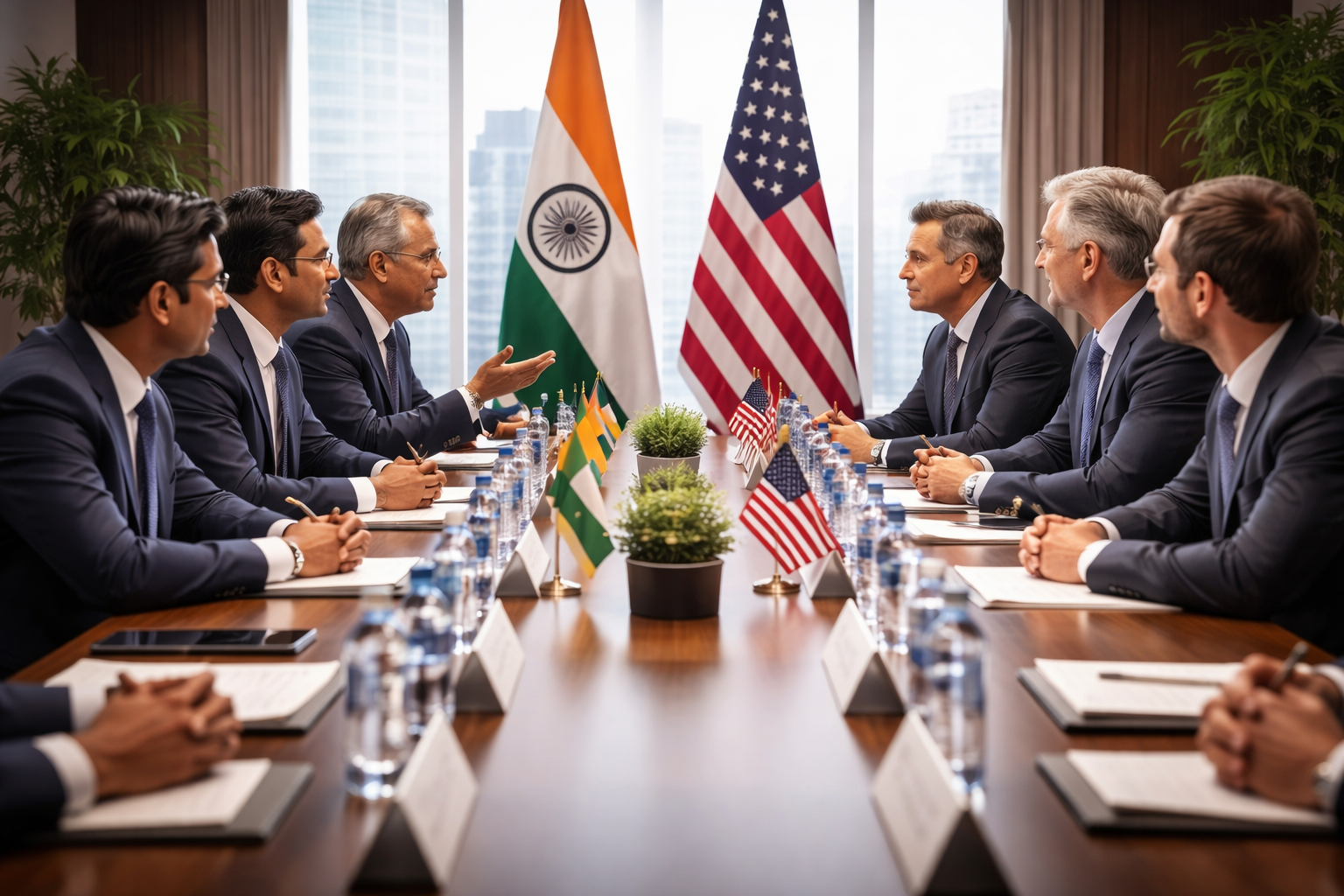
The haan-ji reflex carries specific costs in diplomacy. Chinese and Western practitioners who deal with India observe a consistent pattern: Indian negotiators avoid saying a clear no, work hard to preserve atmospherics, and often sketch fallback positions early to signal flexibility. Beijing exploits this consciously — staging small apparent concessions at working level, presenting softened principles as movement, and pocketing any reciprocal flexibility while the rhetorical concession is quietly walked back at a higher level.
The LAC border talks have a specific institutional dimension that compounds this. Negotiations conducted substantially at the military level — Corps/Div/Bde Commander meetings, working mechanism consultations — carry the Army’s authority gradient directly into the room. An officer in a system that rewards reporting satisfaction upward, facing a tightly briefed Chinese counterpart with explicit mandates and limited personal latitude, is not institutionally equipped to hold a position under sustained pressure. The haan-ji reflex and the career calculus point in the same direction: find something to announce, keep the atmosphere warm, leave the hard line for the next round. We are wired for closure. They are comfortable with process without end.
Ji-huzoor is not Indian
The comparison with Trump’s NSA/NSC that preceded this post is not deflection. It is evidence for the central thesis: deference pathology is a design problem, not a cultural one. By ‘deference pathology’ I mean a recurring organisational habit of yielding to authority even when it harms the mission — a design flaw in how decisions are made, not in the people themselves.
The consolidation of NSA and Secretary of State roles in the US, the removal of independent institutional voices, the televised cabinet sessions that have become competitive performances of public praise — these are structurally identical to what haan-ji syndrome produces in Indian institutions. The cost of agreement driven to zero. The cost of dissent raised sharply. America had institutional counter-designs — an independent NSA, competitive interagency process, career officials empowered to dissent — and is currently dismantling them. India’s problem is that those counter-designs were never fully built in the first place. In both cases the mechanism is identical. The accent is different.
Haan-ji syndrome is not an Indian defect. It is what happens when institutional design removes the cost of agreement and raises the cost of dissent — in any culture, at any level of development.
Three counter-gradients
Structural counter-gradients in designated spaces. Crisis cells, negotiating teams, joint headquarters, staff college classrooms — some rooms must operate by different rules. Rotation of command in key institutions. Distributed assessment authority in joint structures. Formal licence for junior voices to raise operational concerns without career consequence. These are engineering decisions, not cultural interventions.
Mission defined with enough precision to anchor dissent. In military and diplomatic settings the mission is to defend capabilities and interests, not to generate warm communiqués. In media it is to scrutinise, not to host. When the mission is explicit, junior actors have something institutional to cite when they push back. Individual courage converted into institutional procedure is the only form that survives personnel rotation.
Respectful speech is necessary, but clarity cannot be the casualty. Genuine vinamrata can say no calmly and early. Saying this we cannot do at the outset is better than months of haan-ji followed by a late, messy retreat. The cockpit ethic is precise: a First Officer calling go-around is not being insolent; he is doing his job. That ethic is needed at the Ladakh negotiating table, in acquisition teams discussing source code sovereignty, and on the stage of every Indian conclave that invites foreign political figures to perform before an Indian audience.
The former Ambassador’s intervention was not a comment on a bad panel. It was a diagnosis of a failure mode that recurs across India’s most consequential institutional spaces. The variable grammar of authority reproduces the gradient with every performance. The question is not whether India can transform its cultural inheritances. It is whether India can decide, room by room, that some missions are too important to be subordinated to the comfort of the most powerful person present.
That decision is institutional before it is cultural. It requires redesign, not remorse. The only thing that makes it unavailable is choosing not to make it.
Part Two turns to where haanji finds its most consequential expression: India's armed forces, and the authority gradents built into life in uniform — gradients that will determine whether India's push for Theatre Commands succeeds where earlier reform attempts have stalled.