The Father, the Son, and the Narrow Seas
From Admiral Zumwalt’s Operation SEALORDS to Operation Epic Fury in the Persian Gulf

I. The Narrow Sea
In this series, a fourth part was not originally on the cards. But, history holds too many relevant lessons to ignore, and it made sense to take one more step—to look back and let the record of past narrow‑sea/restricted water campaigns hold up a mirror to the way a great‑power navy is challenged through asymmetric approaches.
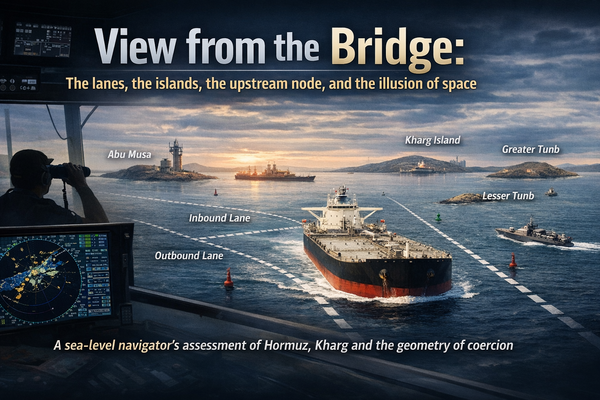
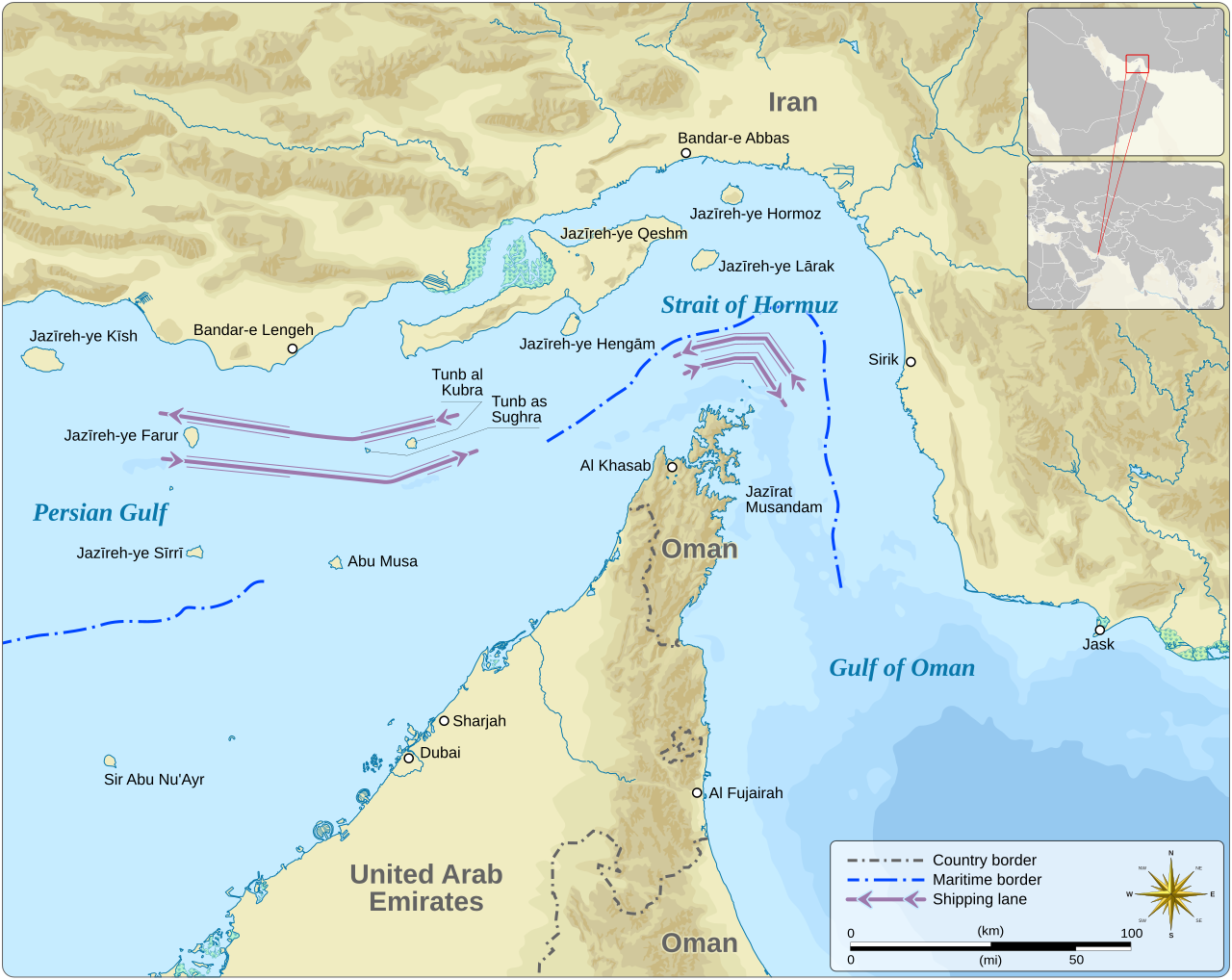
What do we have today? One American carrier strike group is operating in the northern Arabian Sea, while another is on station in the Red Sea. Between them lie the Strait of Hormuz and the shallow basin of the Persian Gulf—the narrow seas where Iran has spent decades developing low‑cost ways to threaten ships, and where Operation Epic Fury is now attempting to reduce that threat. Two carrier groups in this theatre are not unprecedented, but they are uncommon and reflect the level of risk that the United States and Israel currently see in this maritime confrontation.
On USS Abraham Lincoln in the Arabian Sea, F‑35Cs, Super Hornets and Growlers have been flying regular sorties in support of strikes against Iranian missile, drone and naval targets. USS Gerald R. Ford, initially operating from the eastern Mediterranean and now in the Red Sea, has reinforced air and missile defence for Israel and regional partners while contributing its own strike sorties as the campaign widened. Around the approaches to Hormuz, cruisers and destroyers have maintained ‘picket’ and ‘pouncer’ positions, scanning for threats that have haunted these waters for decades: mine‑laying boats, missile craft close to the coast, and ballistic and cruise missiles rising from Iranian territory.
Further west, allied escorts watched the exits of the system—the corridors through which tankers and container ships must pass if Gulf energy and goods are to reach world markets. What began as a defensive effort against cheap drones and missiles from Iranian‑aligned groups has widened into a theatre‑level campaign against the infrastructure that enables such attacks, and to prepare the ground for possible U.S.‑led tanker escort missions once the mine and missile threat is judged manageable.
On a map, it appears simple: gulf, strait, narrow sea, another strait, another narrow sea.
In practice, it reflects a recurring strategic problem—a blue-water navy drawn into cramped waters where weaker adversaries use mines, small craft and land-based weapons to contest control.
To understand how the United States arrived here again, with supercarriers bracketing the same chokepoints that have troubled it for generations, it helps to return to Vietnam’s rivers—and to an admiral named Elmo Zumwalt.
II. The Brown-Water Lesson
When Admiral Elmo Russell Zumwalt Jr. took command of U.S. Naval Forces in Vietnam in 1968, he faced a problem the American Navy had not been built to solve. The service that had dominated the Pacific in the Second World War was designed for blue-water operations and structured around carriers, cruisers, destroyers, and submarines built for open-ocean battle.
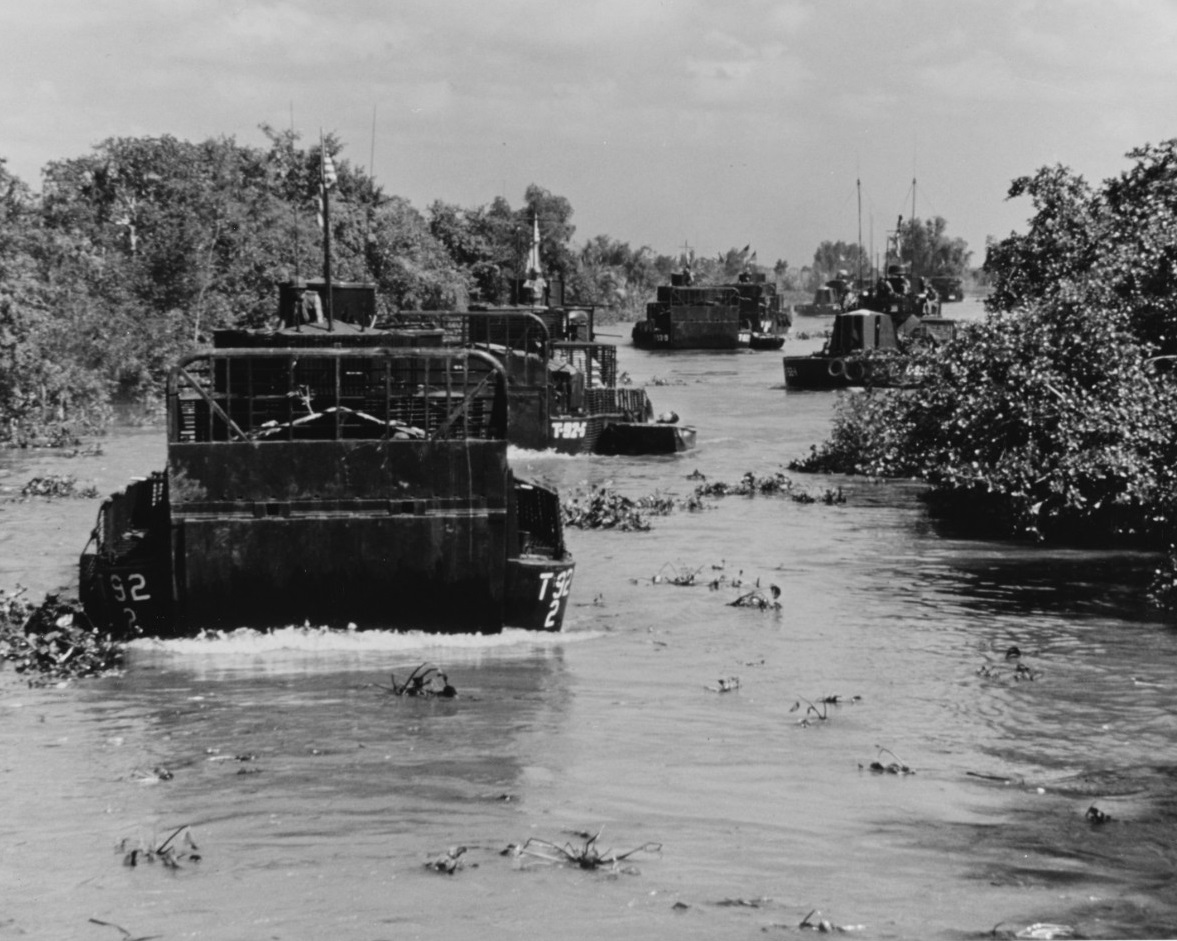
Vietnam forced the US Navy into its rivers. The Mekong Delta was a maze of waterways, canals and mangrove swamps. Supply routes ran on water rather than roads. Guerrillas moved men and matériel in small boats under dense vegetation. A fleet built for oceanic manoeuvre suddenly found itself in a labyrinth.
Zumwalt responded by creating what became known as the brown-water navy. Patrol boats worked the rivers. Coastal craft intercepted infiltration routes. Riverine assault units carried troops along inland waterways. Floating bases tied naval patrols to helicopters and army operations. The effort culminated in the SEALORDS campaign—Southeast Asia Lake, Ocean, River, Delta Strategy—designed to disrupt Viet Cong logistics by controlling the waterways themselves.
For a time, it worked. Infiltration dropped, river traffic became contested, and the United States improvised a littoral fighting force suited to that strange environment.
When the war ended, much of it disappeared.
Vietnam also gave the story a tragic human dimension. Zumwalt’s son, Elmo Zumwalt III, commanded a Swift Boat in the same delta where his father authorised defoliant spraying to strip riverbanks of concealment. Years later, Zumwalt became convinced that Agent Orange contributed to the cancer that killed his son and to the severe disabilities of his grandson. Few episodes show more starkly how tactical measures taken to reduce risk in a narrow battlefield can generate consequences that unfold over decades.
That experience shaped Zumwalt’s thinking long after Vietnam. When he became Chief of Naval Operations in 1970, the youngest at just 49 years, he sought to redesign the fleet based on what he had learned. His concept was the “high-low mix”: a navy that combined high-end capital ships with a larger number of smaller, cheaper vessels capable of operating in contested coastal environments. The logic was simple. The United States would often find itself in regional crises far from the open ocean, where carrier groups excelled. It needed ships it could afford to deploy in numbers, in places too cluttered, too risky or too politically constrained for exquisite platforms to use freely.
The idea made strategic sense. It collided with institutional preference. The Navy’s centre of gravity remained nuclear submarines, aircraft carriers and large surface combatants. Zumwalt’s high-low mix rhetoric entered naval vocabulary; the fleet structure he imagined never fully did.
Half a century later, the service honoured him by naming its most futuristic destroyer after him. USS Zumwalt (DDG‑1000) is stealthy, highly automated and technologically extraordinary. It is also a procurement parable. A class once expected to number three dozen was finally whittled down to just three hulls. Its centrepiece gun became unusable when ammunition costs spiralled to roughly $800,000 per round. The ship is now being refitted for long‑range hypersonic strike. It remains impressive—but also too scarce and too valuable to risk casually in crowded littoral waters full of cheap drones, missiles and mines. The same pattern is visible in the U.S. Navy’s Littoral Combat Ship programme—designed for shallow, contested waters, but beset by cost, survivability and mission‑package problems that left it ill‑suited to the very littoral fight it was meant to own.
III. Warfare in Narrow Seas
Narrow seas warfare is the context in which the Gulf has to be understood. Naval strategist Milan Vego argues that in narrow seas, geography compresses the advantages of sea power: missiles from shore, aircraft from nearby bases, mines, drones and small craft can all threaten even powerful fleets operating close to land. Control, therefore, depends not only on naval strength at sea but also on influence over the land that frames the water.
Vietnam demonstrated this in riverine form. The same logic recurs in maritime chokepoints.
It appeared during the 1980s tanker war, when Iran used mines and small boats to attack shipping despite overwhelming U.S. naval superiority. Washington responded by reflagging Kuwaiti tankers and escorting them through the Gulf. When Iran escalated, Operation Praying Mantis in 1988 sank or damaged much of its small navy in a single day. Yet even that sharp display of force did not abolish the underlying lesson: cheap coastal threats can still impose strategic cost on a stronger navy in a narrow sea.
The pattern appeared again off Somalia. Pirates in open skiffs forced the world’s navies to deploy frigates, destroyers and patrol aircraft to guard merchant shipping. The warships assigned to protect commerce were often more valuable than the vessels they escorted, but the economic and human consequences of leaving sea lanes exposed made that imbalance unavoidable.
In 1988, USS Vincennes shot down Iran Air Flight 655 while operating in a cluttered Gulf environment of small boats and missile threats. In 2000, a suicide boat blew a hole in USS Cole alongside in Aden, killing 17 sailors during what should have been a routine refuelling stop. In 2012, a jumpy security team on a U.S. auxiliary support ship near Jebel Ali misread a small craft and killed an Indian fisherman. In 2016, two U.S. riverine boats strayed into Iranian waters near Farsi Island and their ten‑person crews were seized and paraded on Iranian television before being released the next day. Taken together, these episodes show the same pattern: in confined, politically crowded waters, the measures navies take to protect themselves can, under stress and misperception, generate strategic and political insecurity of their own.
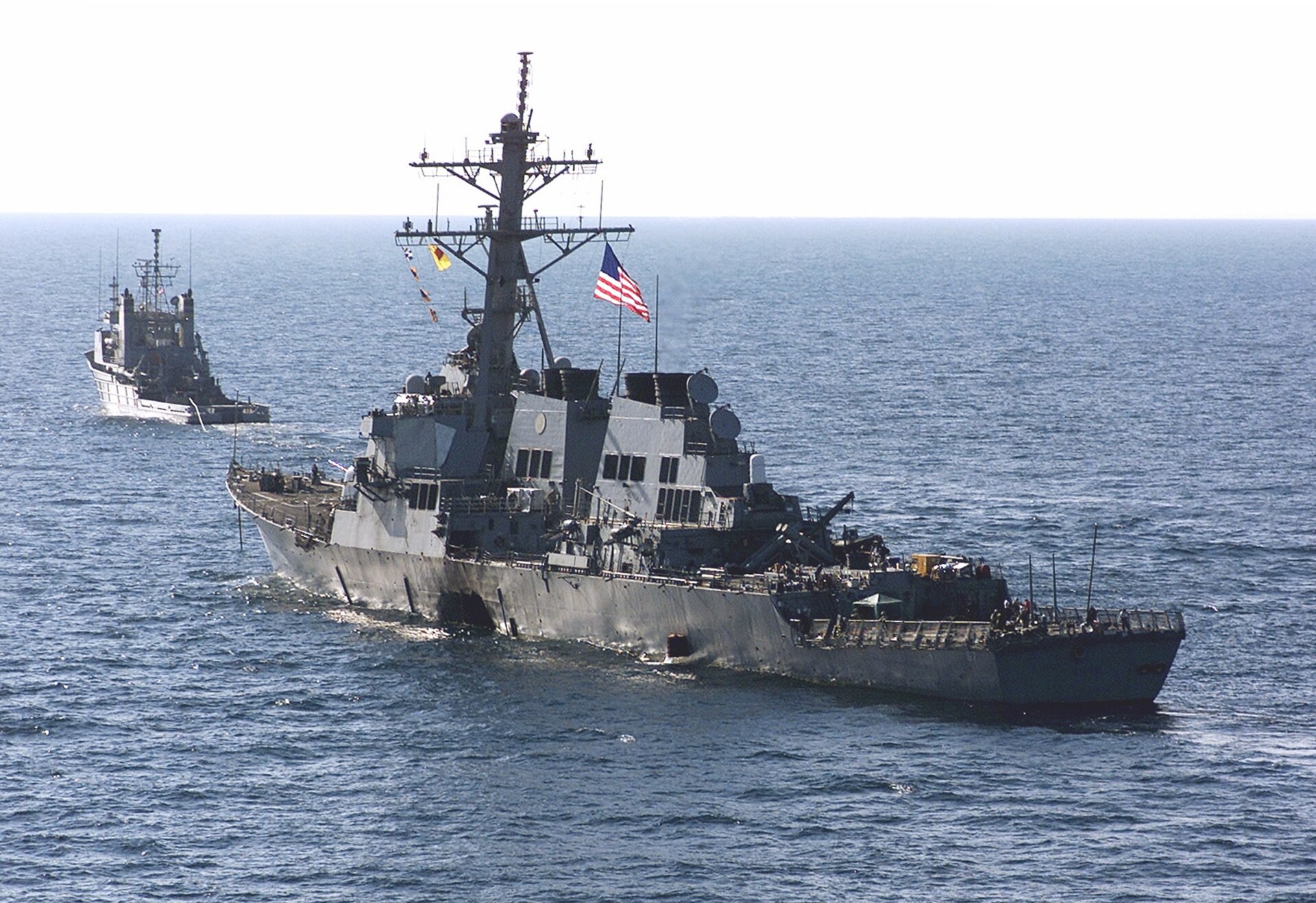
Each episode points to the same reality. Inexpensive weapons and small craft operating from land or coastal waters can impose disproportionate costs on powerful navies in narrow and politically crowded seas.
IV. The Cost-Exchange Problem
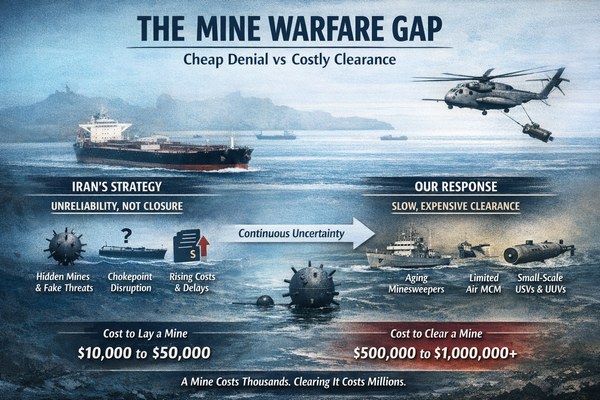
At the centre of the Gulf confrontation lies a familiar strategic equation: the cost‑exchange problem. Iran and its proxies employ mines, drones, coastal missiles and small attack craft designed not to defeat superior naval forces outright but to impose disproportionate costs on them. In narrow seas, persistence can matter more than victory.
Iran’s systems are comparatively cheap, easy to disperse and difficult to eliminate completely. Each mine laid near Hormuz, each drone launched from the coast, each fast‑craft sortie forces the United States and its partners to respond with warships, aircraft and missile interceptors that cost vastly more. Tactically, the stronger side often prevails: most threats are detected, tracked and intercepted. Strategically, the arithmetic still hurts.
A low but persistent tempo of launches compels constant alerts, sorties and defensive patrols. Carrier groups remain on station in confined waters for long periods. Escorts burn through magazines and operating hours to counter weapons that cost a fraction of what it takes to stop them. Even after repeated strikes have damaged Iran’s missile and naval infrastructure, the underlying equation remains stubborn: it is still cheaper to threaten shipping than to protect it.
This is why Iran’s maritime posture rests not only on its regular navy but also on the Islamic Revolutionary Guard Corps Navy. The regular navy offers a visible presence and a conventional façade; the IRGC Navy is built for dispersed, low‑cost harassment from a familiar coastline, using methods tailored to the Gulf’s geography. The weaker actor does not need dominance. It only needs persistence at an acceptable cost to itself.
V. From Escort to Suppression
Operation Epic Fury reflects an attempt to break that pattern.
After years of Iranian-enabled proxy attacks in and around the Gulf, the United States has moved beyond defensive escort and interception. Launched in February 2026, the campaign has become a sustained effort against Iran’s missile forces, drone infrastructure and maritime capabilities associated with threats to shipping near the Strait of Hormuz.
By the second week of operations, public assessments were already speaking of thousands of target points struck, including missile launchers, drone sites, air defences, command facilities and naval bases. Iranian naval and auxiliary vessels associated with mine warfare and coastal attack roles were reportedly damaged or destroyed in significant numbers. U.S. officials claimed a sharp decline in Iranian missile launches compared with the opening phase of the war, though sporadic attacks continued.
Strategically, the logic resembles a theatre-level version of the riverine lesson Zumwalt confronted. Instead of merely protecting movement through the narrows, the United States is trying to dismantle the onshore system that produces the threat. The aim is to reverse the cost-exchange—to make it more expensive for Iran to generate attacks than for the United States to suppress them.
That logic is coherent. It is also incomplete.
A state under heavy pressure can still shift into asymmetric persistence. It can absorb attrition, disperse what remains, reduce the tempo of attack, and continue imposing cost through uncertainty. The narrow sea does not require continuous success to produce strategic effect. It only requires enough threat to keep shipping nervous, insurers cautious, crews reluctant and escort forces tied down.
And the costs of this effort are no longer abstract. American casualties are no longer zero. Iranian losses number in the thousands. Civilian casualties are rising across the region. What began as a campaign to secure the narrow seas and restore deterrence risks expanding into a broader regional war whose political end state is much harder to define than its military opening.
VI. The Lesson of the Narrow Seas
The story linking Vietnam’s rivers, the Persian Gulf, Somali piracy and today’s Gulf war is remarkably consistent.
Powerful navies naturally prepare for the open ocean, where their technological and logistical advantages are greatest. Adversaries do not choose to fight there. They choose rivers, straits, ports, anchorages and crowded littorals. They launch cheap weapons from shore, hide among civilian traffic and exploit constrained geography to complicate overwhelming force.
Each crisis forces the stronger navy to improvise. Each time the lesson fades once the crisis subsides.
Zumwalt understood this better than most. He saw that naval power in the modern world would often be contested not in vast oceanic space but in narrow, cluttered waters where the cost-exchange worked differently. He tried to build a fleet that could afford to operate there. Instead, procurement continued to favour exquisite platforms optimised for blue-water dominance.
Today, under Operation Epic Fury, American carriers and destroyers again operate in and around the Persian Gulf’s chokepoints to keep commerce moving against cheap threats launched from land and small craft. The geography has changed. The strategic problem has not.
As in the constrained littorals Zumwalt faced in Vietnam, narrow seas allow asymmetric tactics to offset conventional naval superiority. Each crisis delivers the same reminder: ignore the narrow seas, and the costs can far exceed the perceived benefits.
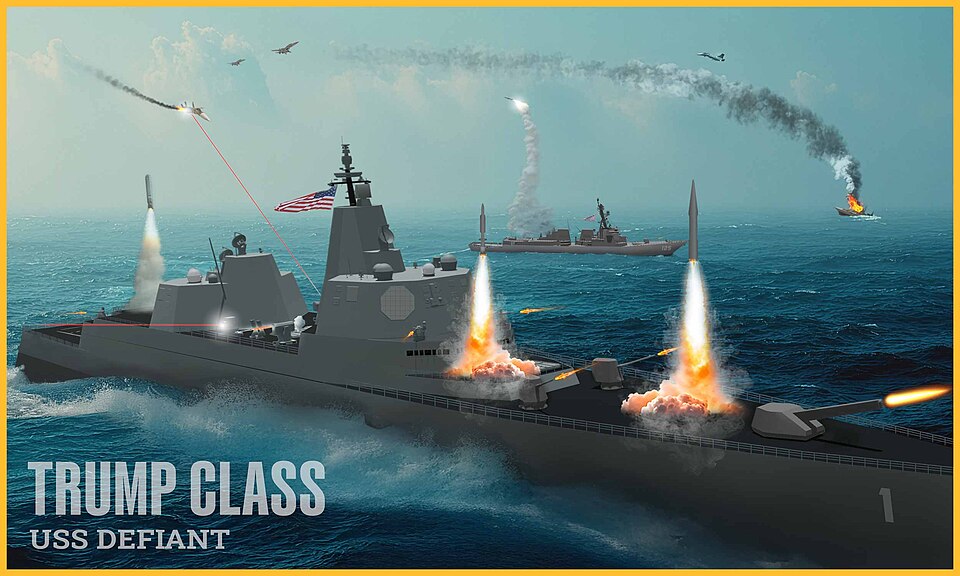
In Washington, however, the instinctive answer may still be scale and firepower. The proposed Trump-class surface combatants—vast, heavily armed warships sold as symbols of American resolve—embody that instinct. On paper, they represent everything a superpower likes to believe about itself at sea: size, striking power and visible dominance.
What they do not easily solve is the cheaper problem. Small states and coastal actors do not need to defeat a fleet in battle. They need only use mines, drones, missiles and maritime risk to make that fleet’s superiority expensive to exercise.
The history traced here suggests a different measure of strength. In rivers, gulfs and straits, decisive qualities are not glamour or scale alone, but cheap mass, tolerance for attrition and the ability to persist in cramped waters where the cost-exchange favours the harasser. Zumwalt tried to build a navy for that world. Epic Fury shows how far the fleet still is from it.
Whether a Trump Class of ships becomes another exquisite platform too valuable to risk in narrow seas—or the nucleus of a genuinely different approach to fighting there—may prove the sharpest test yet of the gap between maritime rhetoric and maritime reality.
Seen against this background, there is much the US Navy can learn from a close partner. The Israeli Navy has repeatedly innovated under constraints—developing the Gabriel anti‑ship missile, the Sa’ar‑class missile boats, and, more recently, layered defences such as the Iron Dome system—to fight cheaply and effectively in confined waters and to counter asymmetric threats. That story of improvisation and adaptation in the littorals deserves its own treatment and is perhaps a series for another day.
Each episode is different in context and technology, but the pattern is constant—cheap, persistent threats in cramped waters force expensive fleets into protracted campaigns of protection and suppression rather than decisive battle.
From Zumwalt’s rivers to today’s Gulf, history holds up the same mirror: in narrow seas and restricted waters, even the greatest navy can find its freedom of action constrained by asymmetric attacks launched from the shore.